After years living and working in Saudi Arabia, our founder brought home a simple idea: the attars and oud of a Gulf majlis should be easy to find in Punjab, honestly priced, and made to give.
Sohni Mehek is an independent shop in Gujranwala. We import oils from suppliers in Saudi Arabia and the Gulf, and we sell compositions under our own names, described by their scent family and notes. This page is the materials desk: how we choose a scent, what goes in the bottle, and the standards we sell by.
We are not an authorised distributor of any other perfume house.
How a Sohni Mehek scent is made
We buy from suppliers in Saudi Arabia and the Gulf. Where a scent is ours, it carries a Sohni Mehek name and is described by its notes, not by another house’s name.
We do not sell our scents as a copy of anyone else’s.
As stock is confirmed, origin and batch details are shared on the product page or on WhatsApp. A 1 ml tester is the honest first step if you are new to an oil.
Attars, oud and sprays
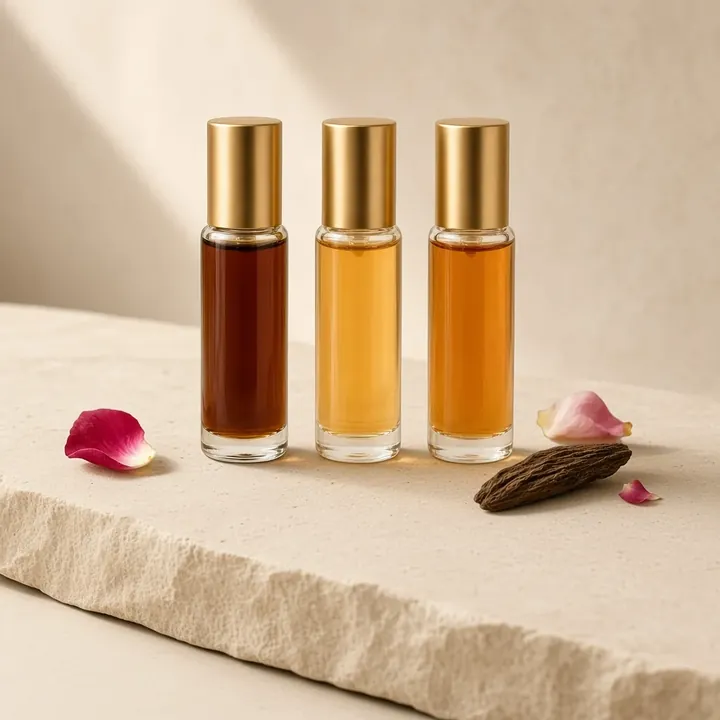
Attars and oud oils sit close to the skin and last for hours. We deliver perfumes, attars and gift sets across Pakistan.
Sprays in the range are eau de parfum. They are for local delivery and pickup only.
Natural oils settle a little differently from batch to batch. Expect minor variation. That variation is character.
Attar
Perfume oil, often in a roll-on. Dab, do not rub.
Oud
Resinous oils imported from Saudi Arabia, from 3 ml to 1 tola (12 ml).
Spray
A 50 ml eau de parfum, available locally in Gujranwala and Lahore for now.
Tester
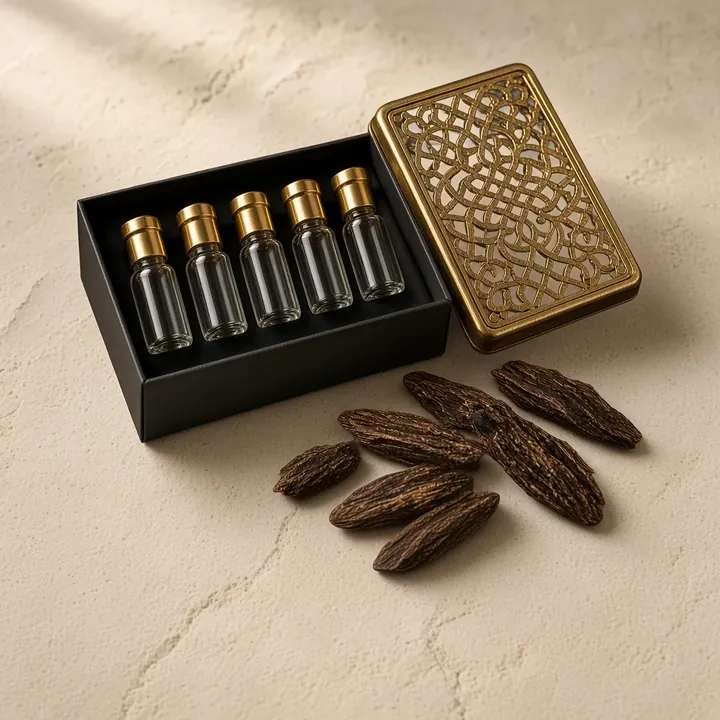
1 ml of a single oil, or a discovery set of five.
Made for Pakistan’s climate and occasions
These oils were chosen for the days people here already keep: Eid, a shaadi, a guest at the door, and the ordinary morning.
An oil attar sits close to the skin. In the heat of a Punjab summer, that is often the point.
Opened fragrance cannot be resold, so we do not take a bottle back simply because a scent is not to your taste. If what arrives is damaged, faulty, or not what we confirmed, tell us, see the returns policy.
Top, heart and base
A Sohni Mehek page lists three layers. Notes are a map, not a promise that you will smell each material in turn. The only true test is a small amount on your own skin.
Top
The first impression, often a spice, a citrus, or a light floral. It fades first.
Heart
The character of the scent, once it has settled on skin. Rose, oud, jasmine, woods.
Base
What remains. Amber, musk, sandalwood, vanilla.
The range
Compositions sold under our own names, and the imported oils of Sohni Everyday and Sohni Royal Oud. Prices and stock still need a final sign-off before launch.
Sohni Everyday
Wearable attars, with matching sprays.
Sohni Royal Oud
Imported from Saudi Arabia. Heavier oils, from 3 ml to 1 tola.
Sohni Mehek compositions
Oils and sprays written under our own names, listed on the site as Western Scents.
Gift sets
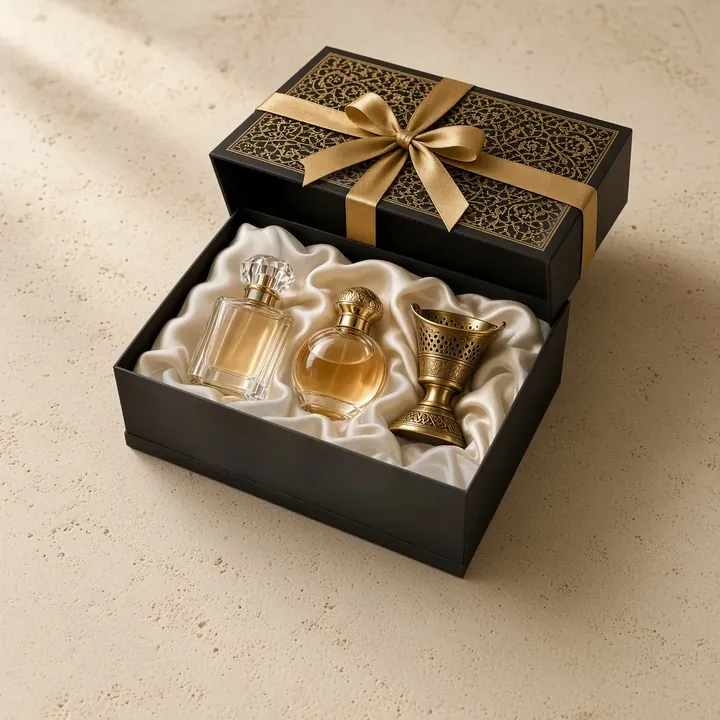
Boxed pairs and family trays for Eid and shaadi, packed in Gujranwala.
Accessories
A gold bakhoor burner to sit with a gift set or a Royal Oud bottle.
Testers
1 ml of a single oil, or a discovery set of five.
Attar in South Asia
The history below is a craft we admire. It is not a lineage we claim.
10th century
Steam and rose water
The Persian physician Ibn Sina described the steam distillation of rose water, a method that later shaped how flower oils were made.
Around 1000 CE
Trade at Kannauj
Organised trade in perfumes at Kannauj, on the Ganges plain, is recorded from about 1000 CE.
1556-1605
The Mughal court record
In the reign of Akbar, the Ain-i-Akbari describes the use of attars and incense. The perfumery trade at Kannauj was already well established by then.
The method
Deg-bhapka
In the traditional North Indian method, flowers are heated in a copper deg. The vapour passes through a bamboo chonga into a cooled bhapka holding sandalwood oil, and the mixture is then aged. Sohni Mehek does not claim this method as its own.
Worn here
Punjab, still
In Punjab, attar remains an oil you put on skin for Eid, for a shaadi, for a guest. Motia and rose travel with the same days. We sell into that habit. We did not invent it.
Sources for the history above, which we admire but do not own: Ibn Sina’s work on rose-water distillation, as discussed by Sahapedia and National Geographic. Organised perfume trade at Kannauj from about 1000 CE, and a well-established industry in Akbar’s reign, from the UNIDO terminal report Assistance to the Perfumery Industry of Kannauj District. The deg-bhapka method as described by The Indian Express and Sahapedia. The Nur Jahan bath story, often told about rose attar, is folklore and is not used here.
Shop the oils
We deliver perfumes, attars and gift sets across Pakistan.